1. The Biomechanics of Ceramic Restorations
Dental veneers are ultra-thin ceramic shells, typically ranging from 0.3 mm to 0.7 mm in thickness, bonded to the facial surface of anterior teeth. Due to this minimal thickness, the chosen material must exhibit exceptional flexural strength to withstand masticatory (chewing) forces without fracturing, while simultaneously mimicking the complex optical properties of natural enamel and dentin.
The clinical decision matrix primarily involves assessing the patient's bite forces, the presence of parafunctional habits (such as bruxism or clenching), and the color of the underlying prepared tooth. A material that is highly translucent will look more natural but may fail to mask severe discoloration, whereas a highly opaque, ultra-strong material may appear artificial if not meticulously customized.
2. Core Material Pillars
To examine the foundational properties applied in restorative dental suites without requiring horizontal table scrolling on mobile screens, essential clinical pillars are structured into responsive cards below:
Clinical Standard: A glass-ceramic offering flexural strength between 400-500 MPa. It is highly valued for its lifelike translucency and ability to chemically bond to the tooth structure.
Clinical Standard: A polycrystalline ceramic completely devoid of glass. It boasts massive flexural strength (up to 1200 MPa), making it nearly indestructible under normal occlusal loads.
Clinical Standard: E.max scatters light similarly to natural enamel. Zirconia is inherently more opaque, though newer high-translucent (cubic) zirconia blends offer improved aesthetics at the cost of some strength.
Clinical Standard: E.max allows for hydrofluoric acid etching and silanization for true chemical adhesion. Zirconia requires specialized MDP-containing primers and mechanical retention.
Journey with Confidence
Your health and well-being are our priority. Experience world-class medical excellence while exploring the wonders of Istanbul.
Acıbadem Hospitals Group:
Global Excellence in Healthcare
While you immerse yourself in the rich history of Istanbul, your well-being is protected by a future-focused healthcare leader. Acıbadem provides world-class medical services, from comprehensive health screenings to advanced treatments, all delivered with a commitment to your safety and comfort.
Travel with the assurance that you and your loved ones are in the most capable hands.
 Explore Medical Services →
3. E.max (Lithium Disilicate): Unrivaled Translucency
IPS e.max® is widely considered the gold standard for anterior (front teeth) aesthetic restorations. Because it is a glass-ceramic, it possesses an intrinsic translucency that allows light to penetrate the restoration, scatter, and reflect off the underlying dentin, perfectly replicating the vitality and opalescence of a natural tooth.
Beyond its optical superiority, E.max is highly favored by prosthodontists for its bonding capabilities. The glass matrix can be etched with hydrofluoric acid, creating a micro-porous surface. When treated with a silane coupling agent and bonded with a resin cement, the veneer essentially fuses with the enamel. This chemical and micromechanical interlock provides immense structural stability, making fracture highly unlikely when bonded to intact enamel.
4. Zirconia: Maximum Fracture Resistance
Zirconia (zirconium dioxide) is a polycrystalline ceramic renowned for its extreme durability. With flexural strengths reaching 1000 to 1200 MPa in its traditional tetragonal form, it is virtually impervious to chipping or fracturing under standard physiological loads. This makes zirconia the material of choice for patients with severe bruxism (teeth grinding) or when creating full-coverage crowns in the posterior (back) segments of the mouth.
Aesthetically, traditional monolithic zirconia is highly opaque. While this is a disadvantage for mimicking translucent enamel, it becomes a distinct clinical advantage when the surgeon needs to mask severely discolored underlying teeth, such as those affected by tetracycline staining or darkened endodontically treated (root canal) teeth. Modern advancements have introduced high-translucent (cubic) zirconia, which improves aesthetics but sacrifices a portion of the material's legendary fracture resistance.

5. Marginal Fit, Bonding Protocols, and Stability
The marginal adaptation—the precision with which the veneer meets the natural tooth—is critical for preventing microleakage, recurrent decay, and periodontal inflammation. Both E.max and Zirconia are milled using highly advanced CAD/CAM (Computer-Aided Design and Manufacturing) technologies, allowing for margin precision within microns. However, the true difference lies in the clinical delivery.
Because zirconia lacks a silica glass matrix, it cannot be etched in the traditional sense. It requires air-particle abrasion (sandblasting) and specialized chemical primers containing 10-MDP to achieve a strong bond. If a veneer preparation is heavily reliant on dentin rather than enamel, or if isolation from moisture is compromised during cementation, the lack of true chemical fusion makes zirconia veneers slightly more prone to debonding (falling off) compared to their E.max counterparts.
Lithium disilicate (E.max) exhibits a unique optical property known as the chameleon effect. Because of its light-scattering matrix, the material naturally pulls and blends color from the surrounding adjacent teeth and underlying preparation, making it the most forgiving and visually seamless option for partial smile makeovers.
Enrich Your Exploration
Enhance your medical journey with our hand-picked partners offering luxury stays and seamless travel in Turkiye.
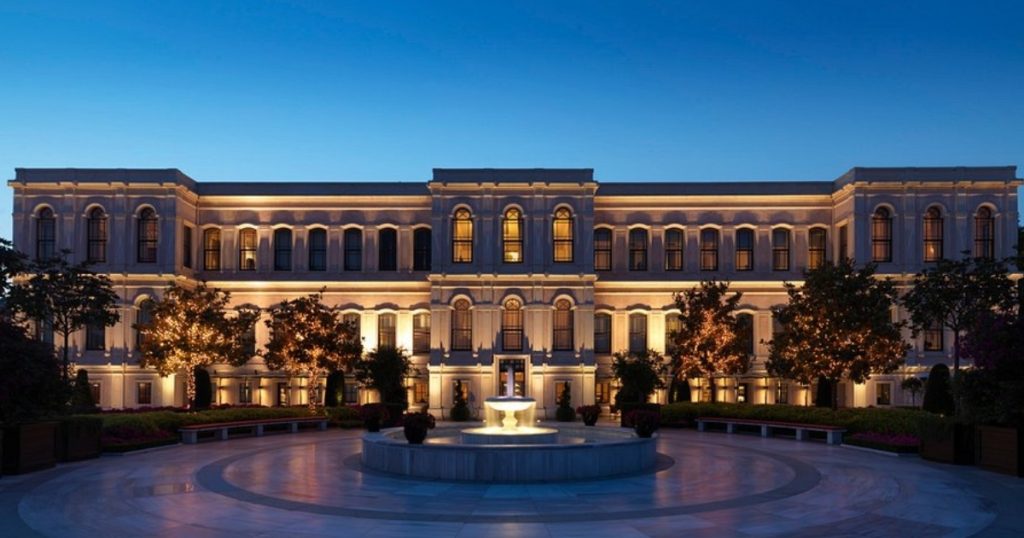
Four Seasons:
Bosphorus, Perfected
Escape the city's vibrant pulse to a serene waterfront palace. Here, timeless elegance and flawless service create your perfect moment.
 Book Your Escape →

Garenta:
Discover More of Turkiye
Don't just see the landmarks; experience the real culture. Garenta offers the freedom to discover hidden treasures at your own pace.
 Get Your Car →
Academic References & Data Sources
- Journal of Prosthetic Dentistry: Fracture Resistance and Clinical Survival Rates of Lithium Disilicate vs. Zirconia Veneers.
- Dental Materials: Optical Properties and Light Transmissibility of Advanced CAD/CAM Ceramics.
- International Journal of Periodontics & Restorative Dentistry: Marginal Adaptation and Bonding Protocols for Polycrystalline Ceramic Restorations.