
1. The Transition to 3D Intraoral Scanning
The foundation of a flawless cosmetic restoration lies in the exact replication of the patient's existing dental anatomy. Traditional polyvinyl siloxane (PVS) impressions are prone to dimensional distortion, thermal expansion, and tearing upon removal. Today, 3D intraoral scanners utilize high-speed confocal microscopy to capture thousands of structural data points per second.
This optical mapping generates a stereolithography (.STL) or polygon file (.PLY) with zero physical distortion. The resulting digital models provide the laboratory with hyper-accurate subgingival margins and interocclusal records, ensuring that the subsequently designed ceramic veneers or crowns will fit with absolute, friction-tight precision.
2. Core Digital Smile Design Pillars
To examine the foundational protocols applied in digital aesthetic dentistry without requiring horizontal table scrolling on mobile screens, essential clinical pillars are structured into responsive cards below:
Clinical Standard: High-resolution optical cameras instantly digitize the hard and soft tissues, eliminating impression material distortion and gag reflexes.
Clinical Standard: Aligning the 3D dental models with dynamic facial videos and photographs to ensure the new smile parallels the interpupillary and facial midlines.
Clinical Standard: Printing the digital design into a temporary bis-acryl resin matrix, allowing the patient to "test drive" their new smile physically before any drilling occurs.
Clinical Standard: Automated milling machines carve the final restorations from monolithic ceramic blocks with tolerances as tight as 20 micrometers.
Journey with Confidence
Your health and well-being are our priority. Experience world-class medical excellence while exploring the wonders of Istanbul.
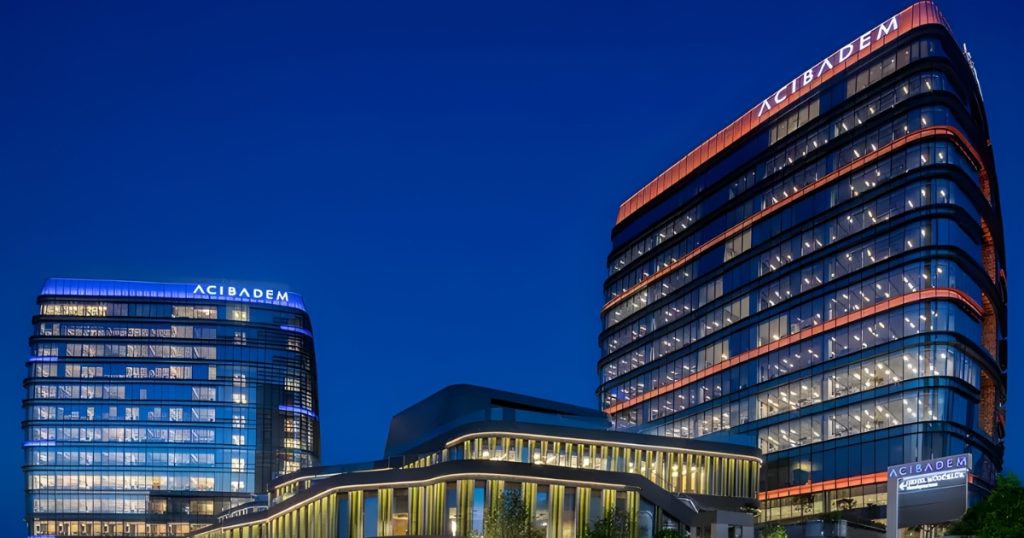
Acıbadem Hospitals Group:
Global Excellence in Healthcare
While you immerse yourself in the rich history of Istanbul, your well-being is protected by a future-focused healthcare leader. Acıbadem provides world-class medical services, from comprehensive health screenings to advanced treatments, all delivered with a commitment to your safety and comfort.
Travel with the assurance that you and your loved ones are in the most capable hands.
 Explore Medical Services →
3. Facial Midline Harmony and Dynamic Analysis
A beautiful smile cannot be designed in isolation; it is a dynamic structure that must harmonize with the entire face. Traditional lab technicians often fabricated veneers solely based on a plaster cast of the teeth, blind to how those teeth aligned with the patient's eyes, nose, and lips. This disconnect frequently led to canted (slanted) occlusal planes or midlines that drifted off-center.
The Digital Smile Design concept is intrinsically "facially driven." By superimposing the 3D intraoral scans onto dynamic high-resolution facial videos, the software anchors the restorative design to stable facial landmarks. The prosthodontist precisely calibrates the dental midline to the facial midline and ensures the curve of the incisal edges perfectly shadows the curvature of the lower lip during a natural, unforced smile.
4. Automated Milling (CAM) and Micron-Level Fit
Once the digital blueprints are finalized and approved by the patient, the data is transferred to the Computer-Aided Manufacturing (CAM) unit. Unlike hand-stacked porcelain, which is subject to human error and shrinkage during oven firing, CAM utilizes advanced 5-axis robotic milling machines.
These units carve the veneers or crowns from highly dense, defect-free blocks of lithium disilicate (E.max) or zirconia. This subtractive manufacturing process achieves margin adaptations with gaps smaller than 20 to 30 microns. Such microscopic precision virtually eliminates the risk of bacterial microleakage at the cementation line, exponentially increasing the biological longevity of the restoration and protecting the underlying gingival health.

5. The Motivational Mock-up: Eliminating Unpredictability
Historically, cosmetic dentistry required a leap of faith; patients did not see their final smile until the permanent veneers were glued in place. Digital Smile Design entirely eliminates this clinical unpredictability through the "motivational mock-up."
Using a 3D-printed model of the CAD design, the dentist fabricates a highly accurate, temporary resin shell directly over the patient's unprepared teeth. This immediate, physical "test drive" allows the patient to evaluate the shape, length, and phonetic function of their new smile in the mirror. Any desired modifications are fed back into the software in real-time, ensuring that when the irreversible step of tooth preparation begins, the final outcome is already 100% agreed upon and guaranteed.
Advanced DSD protocols now merge 3D facial photogrammetry, intraoral optical scans, and Cone Beam Computed Tomography (CBCT) bone scans into a single, cohesive "Virtual Patient." This allows interdisciplinary teams to plan complex implant and aesthetic cases simultaneously with absolute anatomical safety.
Enrich Your Exploration
Enhance your medical journey with our hand-picked partners offering luxury stays and seamless travel in Turkiye.
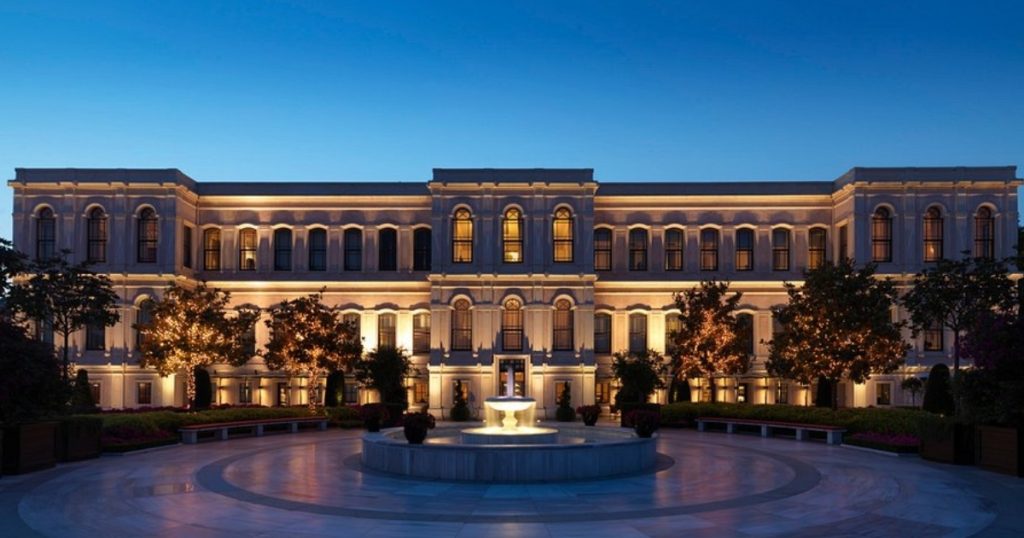
Four Seasons:
Bosphorus, Perfected
Escape the city's vibrant pulse to a serene waterfront palace. Here, timeless elegance and flawless service create your perfect moment.
 Book Your Escape →

Garenta:
Discover More of Turkiye
Don't just see the landmarks; experience the real culture. Garenta offers the freedom to discover hidden treasures at your own pace.
 Get Your Car →
Academic References & Data Sources
- Journal of Esthetic and Restorative Dentistry: Digital Smile Design: A Computer-Based Planning Technique for Aesthetic Restorations.
- Dental Materials: Marginal Adaptation and Accuracy of CAD/CAM Milled Lithium Disilicate and Zirconia Restorations.
- International Journal of Computerized Dentistry: Integration of 3D Facial Scans and Intraoral Data to Create the Virtual Dental Patient.